Monarch Butterflies Show a Promising Rebound in Mexico’s 2025–2026 Overwintering Season
Monarch Butterflies Show a Promising Rebound in Mexico’s 2025–2026 Overwintering Season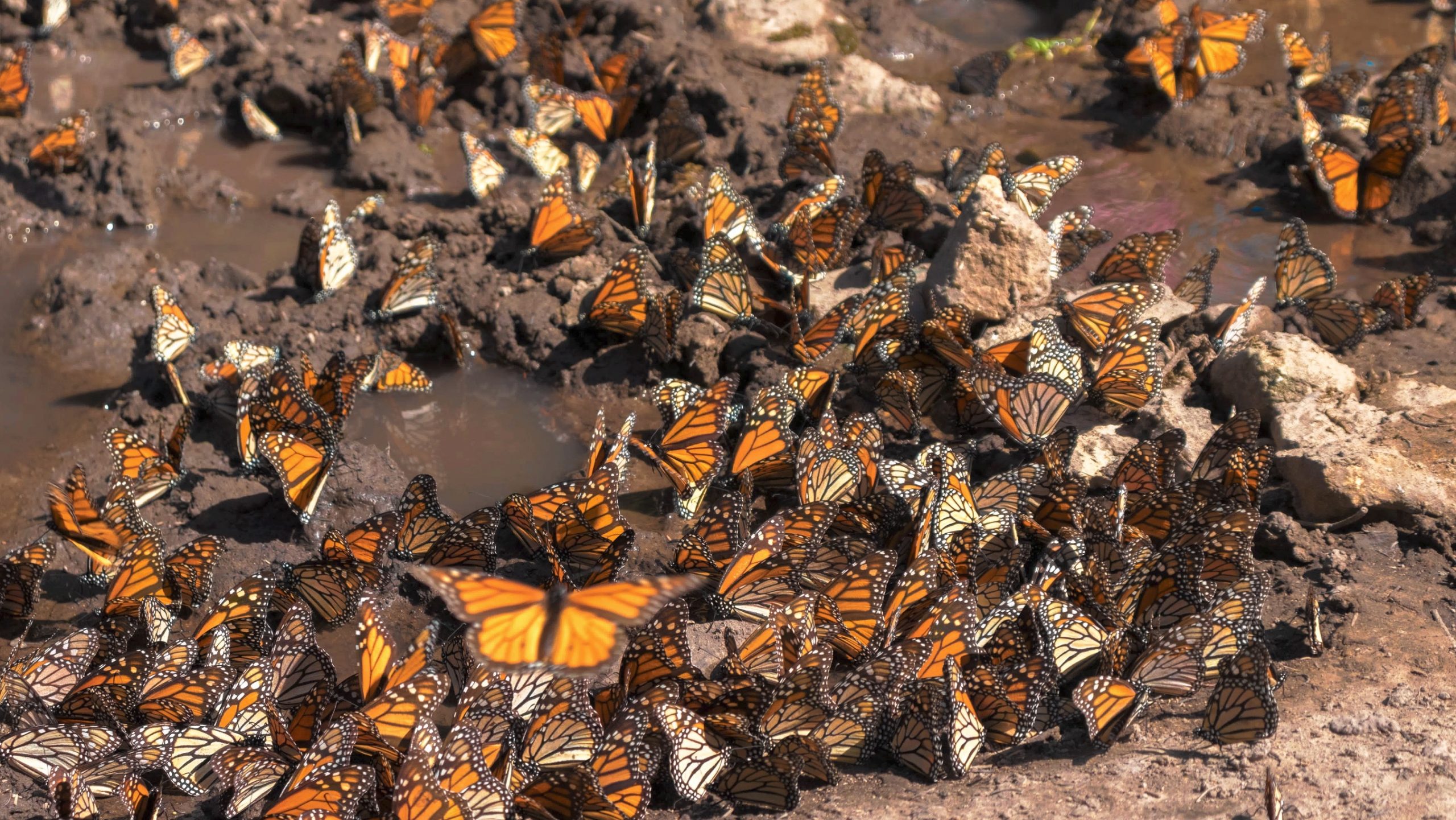
Every winter, monarch butterflies from eastern North America complete one of the most extraordinary migrations on Earth, gathering in the high-elevation oyamel fir and pine forests of central Mexico. For those of us who care about butterflies, migration, and conservation, the annual report on monarch overwintering colonies is always an important moment. It gives us a snapshot of how this iconic migration is doing—and, in many ways, how well we are caring for the landscapes monarchs need across Canada, the United States, and Mexico.
This year brings encouraging news.
According to the new report from Mexico’s Comisión Nacional de Áreas Naturales Protegidas (CONANP) and WWF, monarch colonies occupied 2.93 hectares of forest during the 2025–2026 overwintering season. That represents a 64% increase compared with the 1.79 hectares recorded in 2024–2025.
For monarch enthusiasts, citizen scientists, and eButterfly users, that increase is welcome. It does not mean the monarch migration is “safe,” but it does show that this population still has the capacity to rebound when conditions improve.
What exactly does “2.93 hectares” mean?
The size of monarch overwintering colonies in Mexico is usually reported as the area of forest occupied by clustered butterflies, rather than by trying to count each individual insect. Researchers visit known overwintering sanctuaries, locate colonies, map their perimeter using GPS, and calculate the forest area occupied by the butterflies. This method has been used for many years and allows scientists to compare one winter season to another.
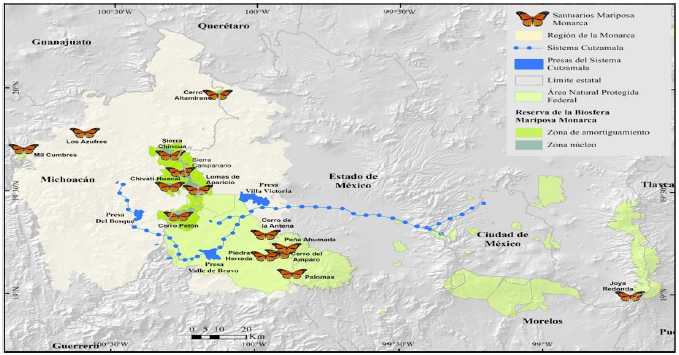
During the 2025–2026 season, monitoring teams visited the 13 known overwintering sanctuaries in the Monarch Region. They documented nine colonies in total: three in Michoacán and six in the State of Mexico. Seven were recorded in the second half of December 2025, and two more in January 2026.
Of those colonies, five were located inside the Monarch Butterfly Biosphere Reserve, occupying 2.271 hectares, while four colonies outside the reserve occupied 0.661 hectares. The report also notes a very small colony at Atlautlaoccupying 0.002 hectares, but because it lies outside the traditional Monarch Region, it was not included in the total.
A rebound worth celebrating—but also keeping in perspective
A 64% increase is significant and worth celebrating. After several years of low overwintering area, it is heartening to see monarchs occupying more forest this winter than last.
At the same time, perspective matters. The report reminds us that monarch colony area has varied enormously over the decades. The lowest values in the long-term record included 0.67 hectares in 2013–2014 and 0.9 hectares in 2023–2024, while the highest recorded area was 18.19 hectares in 1996–1997. The bar chart on page 3 makes this especially clear: this year’s 2.93 hectares is an improvement, but it remains far below the levels documented in some earlier decades.
In other words, this is good news—but not a signal to let our guard down.
Where were the largest colonies?
The largest colony this season was recorded in El Rosario, Michoacán, where monarchs occupied 1.622 hectares. The smallest measured colony within the main report area was in San Francisco Oxtotilpan, at the Cerro del Amparo sanctuary, occupying 0.031 hectares. Other important colony sites included La Mesa (0.251 ha), San Pablo Malacatepec (0.158 ha), Sierra Chincua’s state property (0.130 ha), Crescencio Morales (0.110 ha), Palomas (0.450 ha), Piedra Herrada (0.043 ha), and Peña Ahumada (0.137 ha).
This spread across multiple colonies matters. Monarch overwintering is not just about one site or one mountain. It is about an entire region of forested habitat that supports clustered butterflies during one of the most vulnerable stages of their annual cycle.
Why monarchs still face major challenges
The report is clear that monarchs continue to face serious threats across their migratory range. These include the loss of milkweed in breeding areas due to heavy herbicide use, land-use change across North America, and climate change, including impacts on both breeding grounds and overwintering conditions.
That is one reason this annual overwintering measurement is so important. The monarch migration depends on successful reproduction and migration across an enormous international landscape. What happens in southern Canada matters. What happens in the U.S. Midwest and southern states matters. And what happens in the forests of central Mexico matters too.
This is also why monarch conservation is such a powerful example of shared responsibility. No one country, organization, or community can protect this migration alone.
Why this matters to eButterfly users
For eButterfly users, this report is more than a headline. It is a reminder that butterfly observations contribute to a much bigger picture.
Every checklist, every monarch sighting, every record of breeding, nectaring, or migration helps strengthen our understanding of butterfly populations and seasonal movements. Citizen science does not replace large-scale monitoring in overwintering sites—but it complements it. Together, local observations and international monitoring help reveal how monarchs are responding to weather, habitat, land use, and climate over time.
For those of us in Canada, the monarch’s journey can sometimes feel abstract once autumn migration ends. But this report reconnects us to the final destination of many of the butterflies we watch in our gardens, parks, roadsides, and meadows. The monarch you reported during late summer or fall migration is part of a continental story that stretches all the way to the mountains of Mexico.
What can we do now?
This year’s increase should energize, not relax, our efforts. Monarchs need abundant milkweed for breeding, diverse nectar sources during migration, and healthy forest habitat for overwintering. Supporting butterfly-friendly habitat, reducing pesticide pressure where possible, participating in community science, and sharing accurate information about monarch conservation all remain important.
Just as importantly, we should keep paying attention to long-term trends. One stronger year is encouraging, but monarch conservation depends on sustained action across many years.
For now, though, this report gives us something valuable: hope grounded in evidence.
The 2025–2026 overwintering season shows that monarchs still respond when conditions align and habitat remains available. That resilience is worth celebrating—and protecting. As eButterfly users, we are part of the broader community helping to document, understand, and conserve one of the world’s most remarkable insect migrations.