Call for Applications for Panamanian Schools – Student Butterfly Monitoring Program
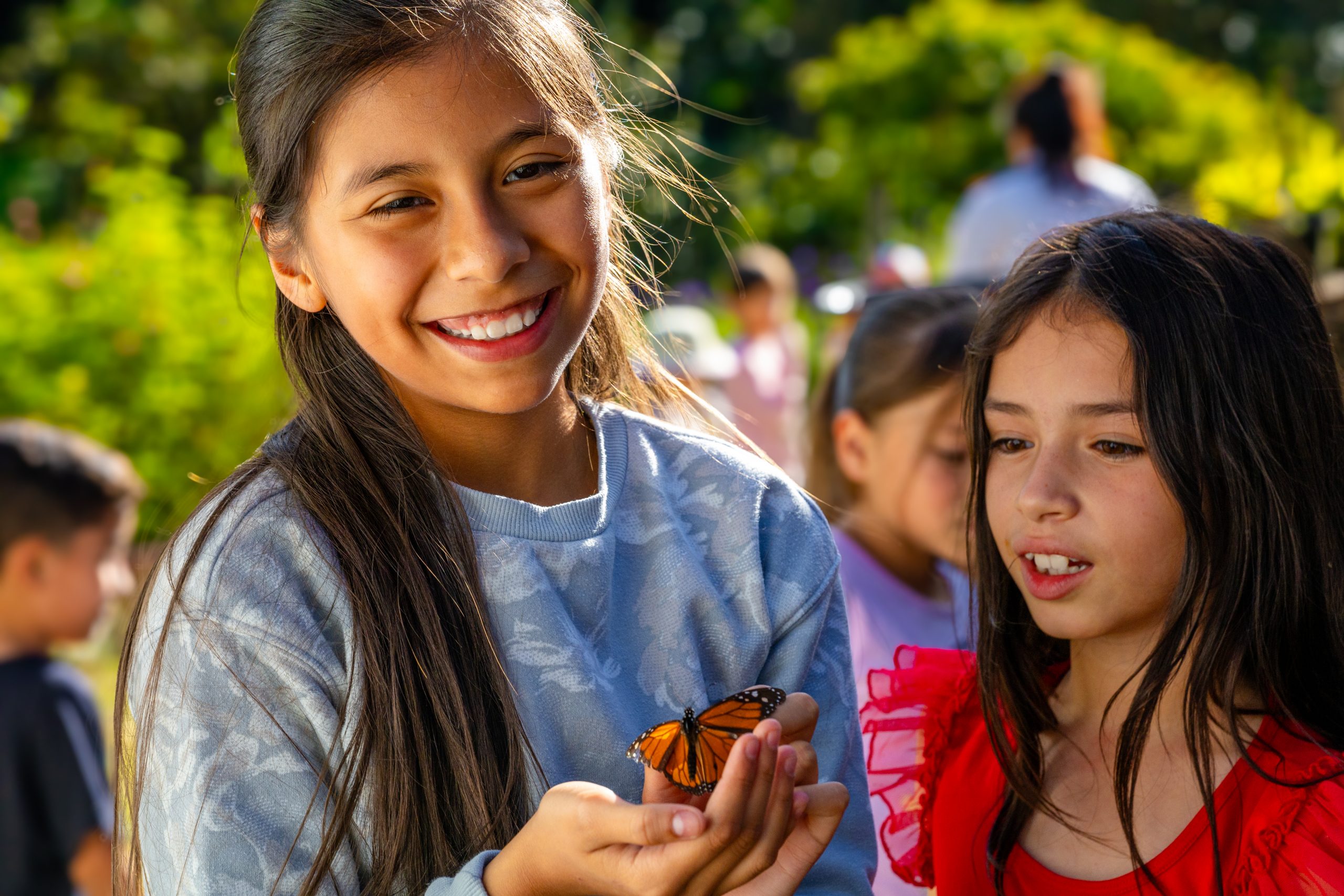
Fundación Alas y Antenas, in partnership with eButterfly and SENACYT, invites secondary-level teachers from public and private schools in Panama to apply to the Student Butterfly Monitoring Program—an educational and scientific initiative led by students and implemented throughout the 2026 school year.
This program seeks to integrate community science, environmental education, and active learning, enabling students to participate directly in butterfly monitoring—one of the most important insect groups as indicators of ecosystem health.
What does the program involve?
The Student Butterfly Monitoring Program is a year-long initiative in which students, guided by their teacher, carry out standardized monitoring activities within the school environment. Through these activities, students learn about biodiversity, ecology, the scientific method, and conservation, while generating real data that contribute to scientific knowledge.
The program runs throughout the 2026 school year and combines fieldwork, observation, data recording, basic analysis, and outreach activities.
Program objectives
-
Foster active learning and scientific literacy among secondary-level students.
-
Connect students with local biodiversity through butterfly monitoring.
-
Introduce community science and the scientific method in the school context.
-
Promote environmental education and awareness of insect and ecosystem conservation.
-
Generate standardized, comparable butterfly data for Panama.
Monitoring methodology
The program uses a standardized methodology applied consistently across all participating schools. Each monitoring event includes three complementary sub-protocols:
Fruit-bait trap monitoring
Records species attracted to fermented fruit, following defined schedules and procedures.
Timed butterfly counts
Visual observations conducted over a fixed time period under suitable weather conditions.
Pollinator garden survey
Observation of adult butterflies and searches for eggs, caterpillars, and chrysalises on host and nectar plants.
Two monitoring events are conducted per month. Students are organized into rotating groups so that, on average, each student participates in one monitoring event per month.
Role of the teacher
The participating teacher serves as the main program coordinator at the school. Responsibilities include:
-
Coordinating the monitoring schedule.
-
Supervising field activities and student work.
-
Coordinating and supervising data entry on the eButterfly platform (by the teacher or by students under supervision).
-
Serving as the liaison between the school and the program team.
The estimated time commitment is approximately two hours per week. Activities may be integrated into class time or organized as extracurricular activities, depending on each school’s structure.
The program may be coordinated by one or more teachers from the same school.
Interested teachers may apply as a team and divide responsibilities related to coordination, activity supervision, and data entry support. In such cases, the school must designate at least one teacher as the primary contact, without limiting the active participation of other teachers.
What do participating schools receive?
Each selected school receives, at no cost:
-
3 fruit traps
-
Up to 8 entomological nets
-
Foldable butterfly guides for participating students
-
10 pollinator-friendly plants
-
An in-person training workshop (2 hours) at the start of the program
-
Methodological support throughout the year
-
Participation certificates for students and schools
-
Recognition and awards at the end of the school year
Eligibility requirements
To apply, schools must meet the following requirements:
-
Have between 12 and 40 secondary-level students who will participate in the program.
-
Designate at least one responsible teacher.
-
Have access to internet or mobile data at the school.
-
Have at least one computer available for data entry.
-
Have access to mobile phones or cameras for photography (owned by students or provided by the school).
Schools that teach in English or French may also apply. In these cases, they may inquire about translation arrangements for materials; this does not imply automatic exclusion from the selection process.
Commitments of selected schools
Selected schools commit to:
-
Participating throughout the 2026 school year.
-
Conducting monitoring activities according to the established protocol.
-
Keeping the provided equipment (traps and nets) in good condition.
-
Facilitating data entry after each monitoring event.
-
Organizing, at the beginning of June, a student-led butterfly education and awareness activity, which may be directed to:
-
Students and teachers only, or
-
The school community and/or the broader local community.
-
-
Providing a letter of commitment signed by the responsible teacher and the school principal.
Application process
Applications are submitted through an online form.
The form must be completed and signed by:
-
A teacher from the school, and
-
The school principal.
The selection process will consider, among other criteria:
-
Motivation of students, the school, and the teacher
-
Capacity for implementation
-
Geographic diversity of participating schools
Key dates
-
Application deadline: March 16
-
Announcement of selected schools: March 20
-
Program start: Early April (activities begin after the initial training, scheduled in coordination with each responsible teacher)
-
Duration: Throughout the 2026 school year
Documents and application
To learn more about the Student Butterfly Monitoring Program, download the information document here:
[Download program information document – PDF]
To review the required institutional commitment and sign the commitment letter requested as part of the application form, download the complete letter here:
[Download Institutional Letter of Commitment – PDF]
To apply, complete the online application form here:
[Complete application form – Google Forms]
For more information or additional inquiries, interested schools may contact ebutterfly@vtecostudies.org